Knowledge is power!
How to protect your website’s images?

Generic selectors
Exact matches only
Search in title
Search in content
Post Type Selectors
knowledgebase
Filter by Categories
  • How to Create Support Tickets

  • How Long does it take to set up my Account?

  • Why Choose Astrihost

  • What is a Domain name?

  • How Can I Transfer My Domain to AstriHost?

  • Domain Registration with Astrihost

  • Changing the nameservers of your domain.

  • Add DNS Records with Zone Editor?

  • How to redirect a Domain in cPanel?

  • Updating your domain contact information – WHOIS.

  • How to Migrate my WordPress Site

  • How to Debug Your WordPress Site with cPanel’s WordPress Toolkit

  • How to Log in to Your WordPress Dashboard

  • How to Edit My WordPress Website in cPanel with WP Toolkit

  • Install a Theme for WordPress

  • Install a WordPress Plugin

  • “Site Quality Monitoring”, for keeping tabs on your website.

  • How to Install WordPress with Softaculous?

  • How to install WordPress via cPanel?

  • How to Boost Your Hosting Performance

  • Understanding and Fixing the 500 Internal Server Error

  • 504 Error Server is Unavailable

  • Managing Website RAM and Physical Memory Usage

  • How to Login to your cPanel

  • How to delete a database in cPanel?

  • How to create a database in cPanel?

  • How to Create Additional FTP Accounts?

  • How to restore a backup of your files?

  • Does Astrihost support multiple PHP versions?

External websites can use the < IMG /> tag to display images from your website elsewhere on the Internet. As a result, other websites will steal your bandwidth.


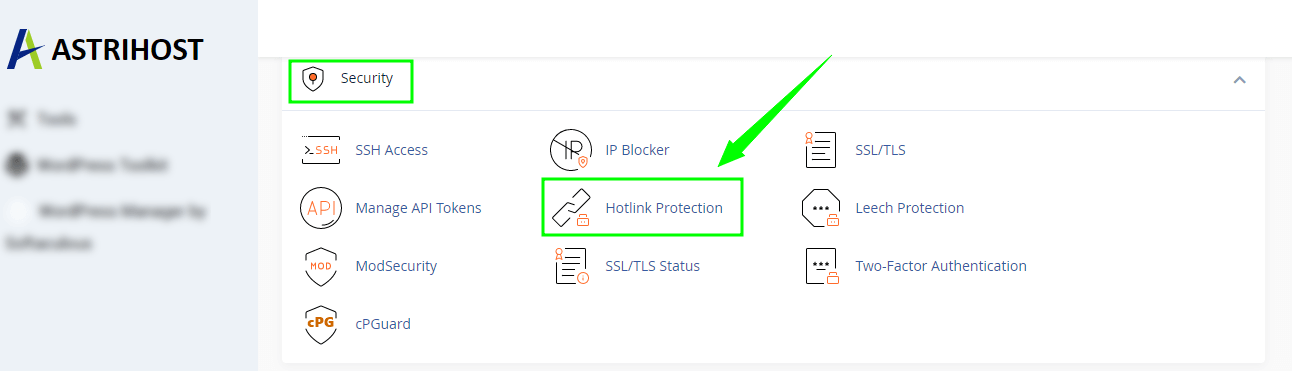
To secure your images, log into your cPanel account.


Scroll to the Security section, and click on the HotLink Protection Icon.
 

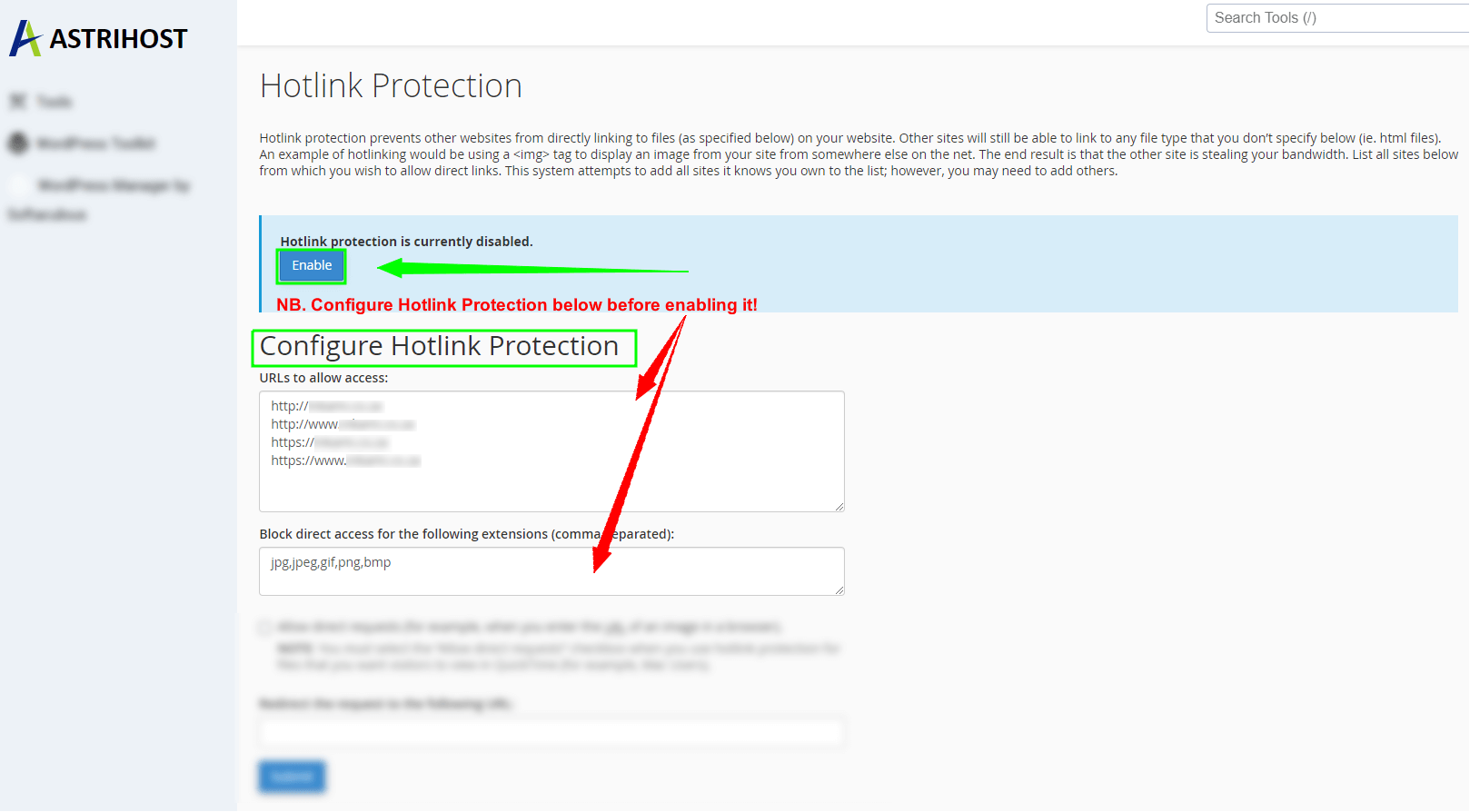
If “Hotlink protection is currently disabled” is displayed, click on the Enable button. NB. Configure your HotLink Protection before Enabling.

          How to Configure Hotlink Protection?

Under the “URL to allow access:” section,

  1. You can allow access to external websites or your own website/s. For example, if you have a subdomain like demo.example.com, you can add the URL of that website to your allowed websites list.
  2. Add the file extensions you want to block from Direct Access.
  3. Tick this block to allow Direct Requests. We don’t recommend allowing direct requests. Open a ticket for assistance on this.


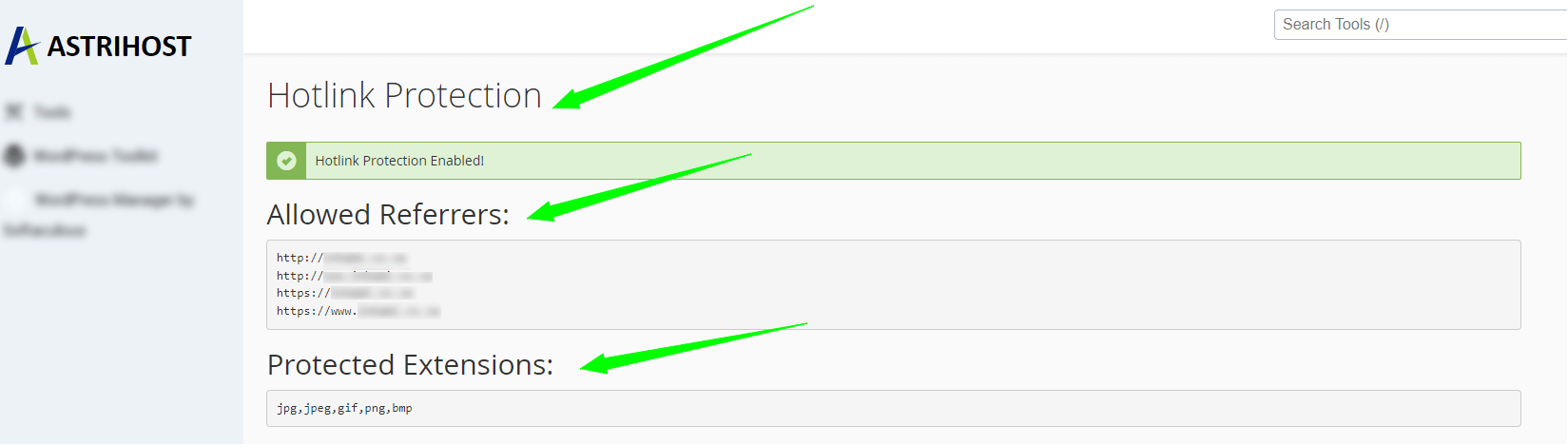
After clicking the Enable button you will receive confirmation that it is enabled.